
Enamel pins are one of the few physical products where a single person with $250 and one good design can reach retail margins in a month. This guide is the business half of the story; the production guide covers how the pins physically get made.
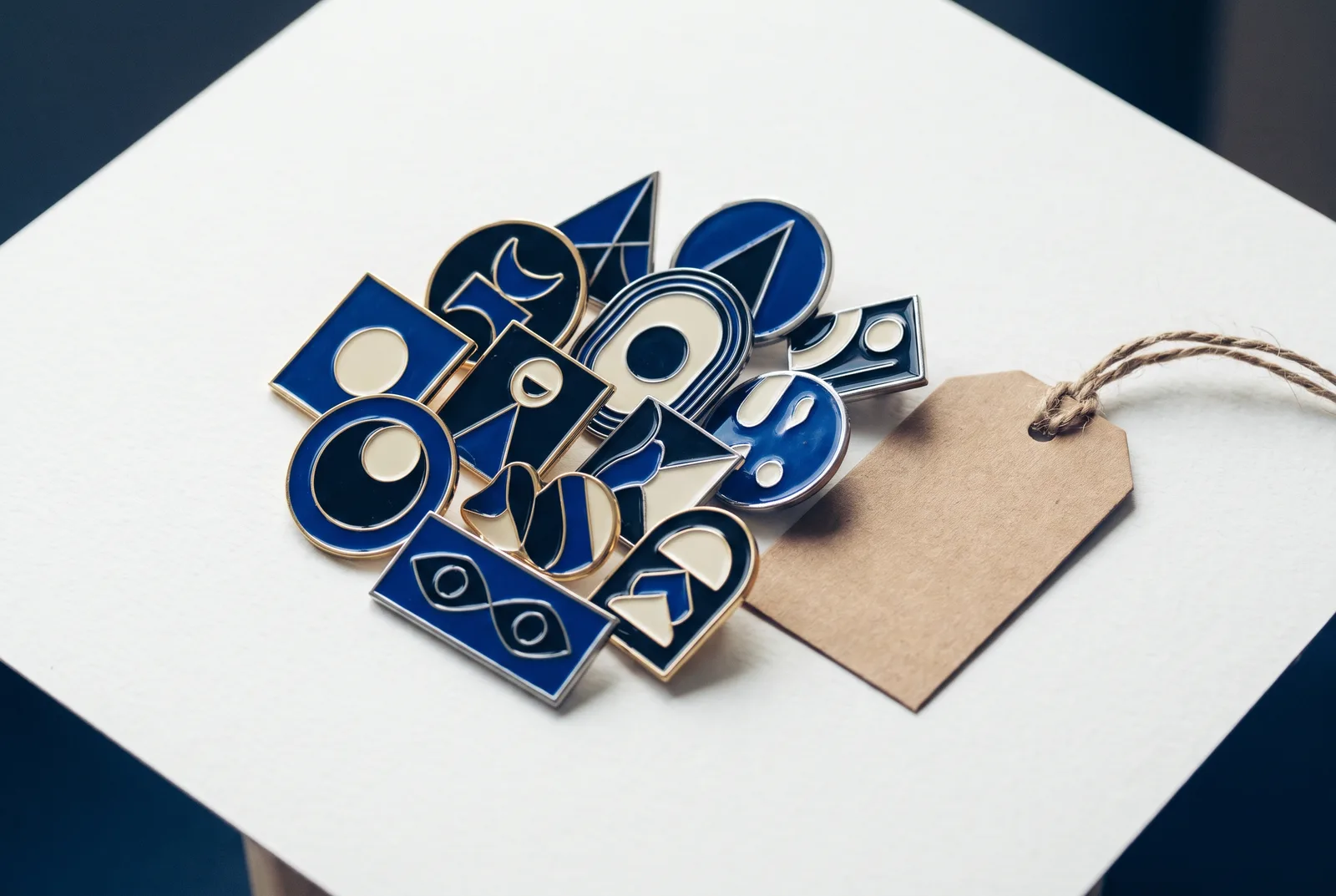
The unit math, honestly
A 1.25 inch soft enamel pin at 100 pieces costs about $2.35 per pin including the mold. It retails at $10 to $14. That spread, roughly 4.5x, is the entire engine, and it improves on reorders because the mold you already paid for is waiting.
| RUN | COST | GROSS AT $11 | MARGIN |
|---|---|---|---|
| First run, 100 pins | $235 | $1,100 | $865 |
| Reorder, 100 pins | $182 | $1,100 | $918 |
| Reorder, 300 pins | $438 | $3,300 | $2,862 |
The trap hides in sell-through, not margin. A pin that sells 40 of 100 still profits; a six-design launch where each sells 15 ties up $1,400 in drawer inventory. Depth beats breadth until a design proves itself.
Designs that sell
Winning pin designs share three traits: they read at arm's length (bold shapes, 4 to 6 colors), they signal an identity the buyer wants to wear (a trade, a fandom of your own invention, a mood), and they photograph well on fabric. Niche beats general every time: a pin for ceramicists outsells a pin for everyone.
Start with one strong design, not four okay ones. Your second design should answer what your first design's buyers asked for, which they will tell you unprompted at any convention table.
Pricing that holds
$10 to $14 for standard 1.25 inch pins, $15 to $18 for numbered chase variants with glitter or translucent effects. Bundle pricing (3 for $28) lifts average order value without discounting the single-pin anchor. Resist $8: it reads as clearance, costs you 27 percent of margin, and attracts the buyers who haggle anyway.
Where pins actually sell
Conventions and fairs convert best per hour: a decent table moves 30 to 80 pins a day at full price, and the table fee is your only marketing cost. Etsy compounds slowly but owns search demand. Your own site keeps the margin Etsy taxes. Instagram sells through both by showing pins on jackets and bags, never on white backgrounds.
Wholesale enters at five-plus proven designs: boutiques buy at 50 percent of retail in dozens, which our wholesale pin terms are built around.
The reorder engine
The first run proves the design; the reorder makes the business. Reorders skip the mold cost and ship in about 8 days, so the working rhythm is: launch 100, reorder 300 when stock hits 30, and hold 30 percent of each batch for restock spikes after a post takes off. Sellers who track this simple loop out-earn sellers with twice the designs.
Five expensive mistakes
Launching six designs at once. Pricing at $8. Skipping the proof review and discovering small text is unreadable in metal. Ordering 25 pieces of a design you believe in (the per-pin cost punishes conviction-free orders). And selling fan art of licensed characters, which works right up until the takedown letter. Original designs keep both the margin and the shop.
Ready to run the numbers on your design? The enamel pins page has the full pricing table, and the quote tool returns a free proof within a business day.
Common questions
How much does it cost to start selling enamel pins?
One design at 100 soft enamel pins costs about $235 all-in, including the mold. Sold through at $11 each, that first run returns roughly $865 gross, which funds designs two and three.
What do enamel pins sell for?
$10 to $14 is the standard shop and convention price for a 1.25 inch pin, $15 to $18 for limited chase variants. Below $8 you are signaling low quality, not offering a deal.
Where do enamel pins sell best?
Conventions and craft fairs convert hardest, Etsy and personal shops compound over time, and Instagram drives both. Wholesale to boutiques at 50 percent of retail becomes worthwhile once you have five or more proven designs.