
Every enamel pin is a small piece of die-struck metalwork. The process has six steps, and only the first two involve you directly: prepare artwork, approve a proof, then the factory strikes a mold, fills enamel, plates the metal, and packs the finished pins. Here is what happens at each stage and where orders usually go wrong.
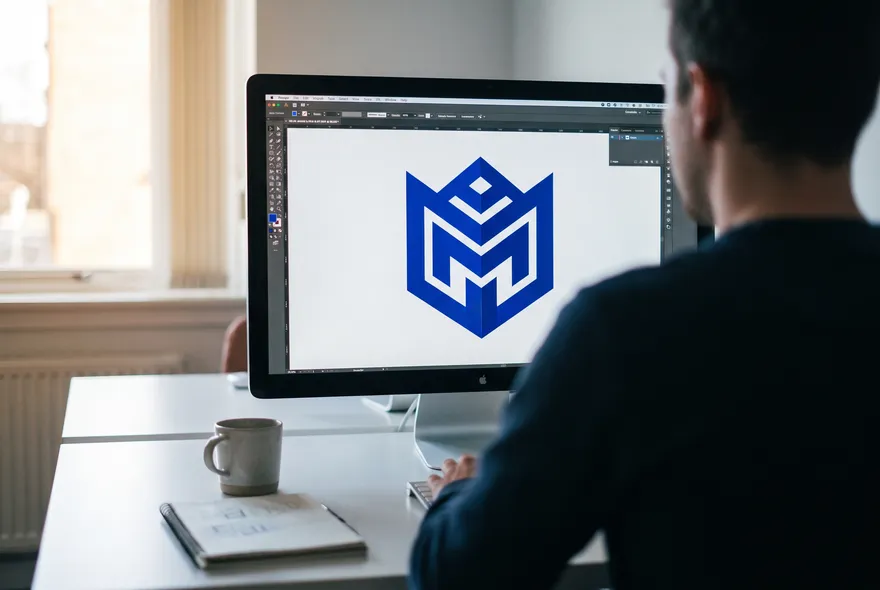
1. Prepare the artwork
Simplify the design into solid color areas separated by lines at least 0.3 mm thick. Every color needs a metal wall around it, so gradients become stepped color bands. Vector files are ideal; a clean drawing works because the factory redraws everything as line art anyway.
2. Approve a production proof
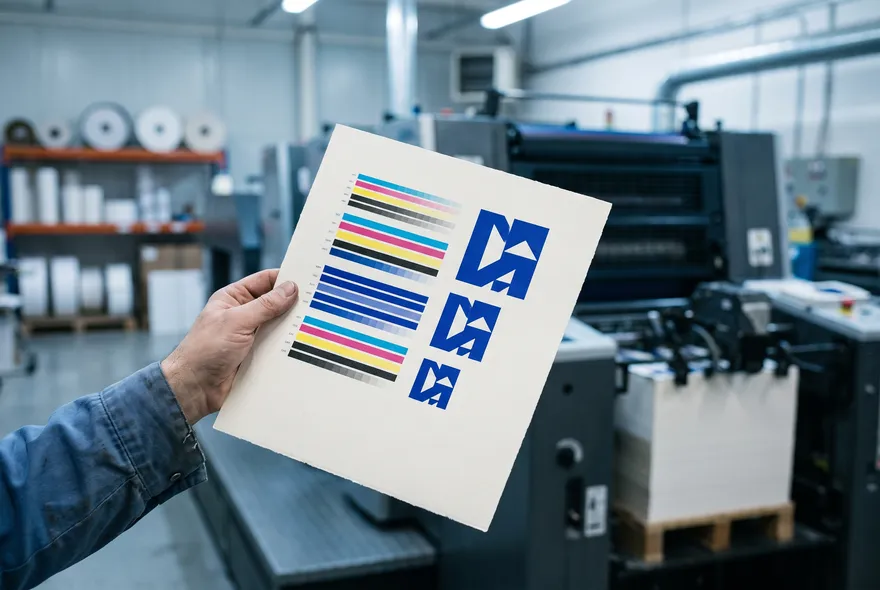
The redrawn art comes back as a proof: exact size, plating color, and a Pantone number for each enamel cell. Check lettering at real size. Text under 1 mm tall fills in during striking, and the proof stage is the free place to fix it.
3. Strike the mold
A steel die of the line work is machined, then pressed into iron, brass, copper or zinc alloy blanks under roughly 40 tons of pressure. Each strike raises the walls that will hold the enamel. The die is the main setup cost, and it is kept for cheap reorders.
4. Fill the enamel
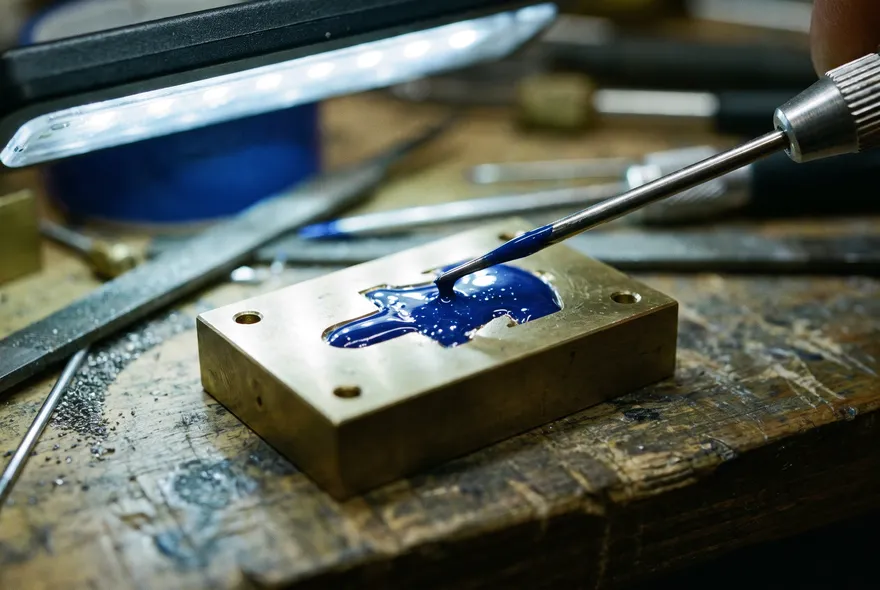
Technicians dispense liquid enamel into each walled cell with a needle, one color at a time, then bake the pin so the enamel cures. Soft enamel stops here with its recessed texture. Hard enamel is overfilled, cured hot, and heads to polishing.
5. Plate and polish
The exposed metal is electroplated in gold, silver, rose gold or black nickel. Hard enamel pins are then ground flat and polished so metal and enamel meet in one smooth face; soft enamel pins get an optional protective epoxy dome instead.
6. Attach backing and pack
A post is soldered on and fitted with a rubber or locking clutch, and each pin lands on a backing card or in a polybag. Quality control pulls misfilled or scratched pins before boxing. From approved proof to delivered box is usually 12 to 15 days.
What making enamel pins costs
The budget for a first run has four parts, and only one of them scales with quantity.
| COST | TYPICAL RANGE | SCALES WITH QUANTITY? |
|---|---|---|
| Artwork redraw and proof | free to $40 | no, one time |
| Steel mold | $50 to $120 by size | no, one time, kept on file |
| Per-pin production | $0.89 to $4.80 each | yes, drops with volume |
| Extras (dome, cards, rush) | $0.15 to $0.30 per pin | yes, optional |
In practice: a 25-piece first run of 1.25 inch soft enamel pins lands around $120 all in, a 100-piece run around $235, and 500 pieces around $650. Reorders skip the mold line entirely, which is why per-pin cost drops faster on the second order than the first.
A file-prep checklist that prevents delays
Nearly every delayed order gets stuck at the same three artwork issues, and all three are fixable before you upload. Keep line work at 0.3 mm or thicker, since anything thinner cannot hold a metal wall. Convert gradients to stepped bands of solid color, because each color needs its own enamel cell. And keep lettering at least 1 mm tall at final pin size; if the name of your band needs a magnifying glass on the proof, it needs a bigger pin or fewer words.
You do not need design software to meet any of this. A clear photo of a drawing works because the artwork redraw step converts everything to production line work anyway, and the proof shows you the result for free.
Can you make enamel pins at home?
Real cloisonné-style pins, no. The stamping press, kilns, and plating baths are industrial equipment, and no craft-store substitute produces the walled metal cells that define the product. What you can make at home are adjacent crafts: shrink-film pins, polymer clay pieces, or resin-domed printed badges. They are fun, but they are a different object.
The practical home route is hybrid: you do the design at your desk, and a manufacturer runs the metalwork. Your real costs are the mold and the minimum run, which together start around $120 for 25 small soft enamel pins.
Making enamel pins to sell
Pins are one of the few merch products with genuine margin at small scale. A 1.25 inch soft enamel pin costs about $2.35 at 100 pieces and sells for $10 to $14 on Etsy or at a convention table. Three rules from sellers who reorder: start with one strong design instead of four okay ones, photograph the pin on fabric rather than white sweep, and keep 30 percent of stock back for restock demand spikes.
When you are ready to price a run, the custom enamel pins page has the full quantity table, and the hard vs soft comparison settles the finish question. Upload the design to the quote tool and the proof comes back within a business day.