
Both pins start life the same way: your artwork is struck into metal, and the recessed cells get filled with colored enamel. The whole hard-versus-soft question comes down to what happens after the fill. That one production step changes how the pin looks, feels, survives, and costs.
The one real difference
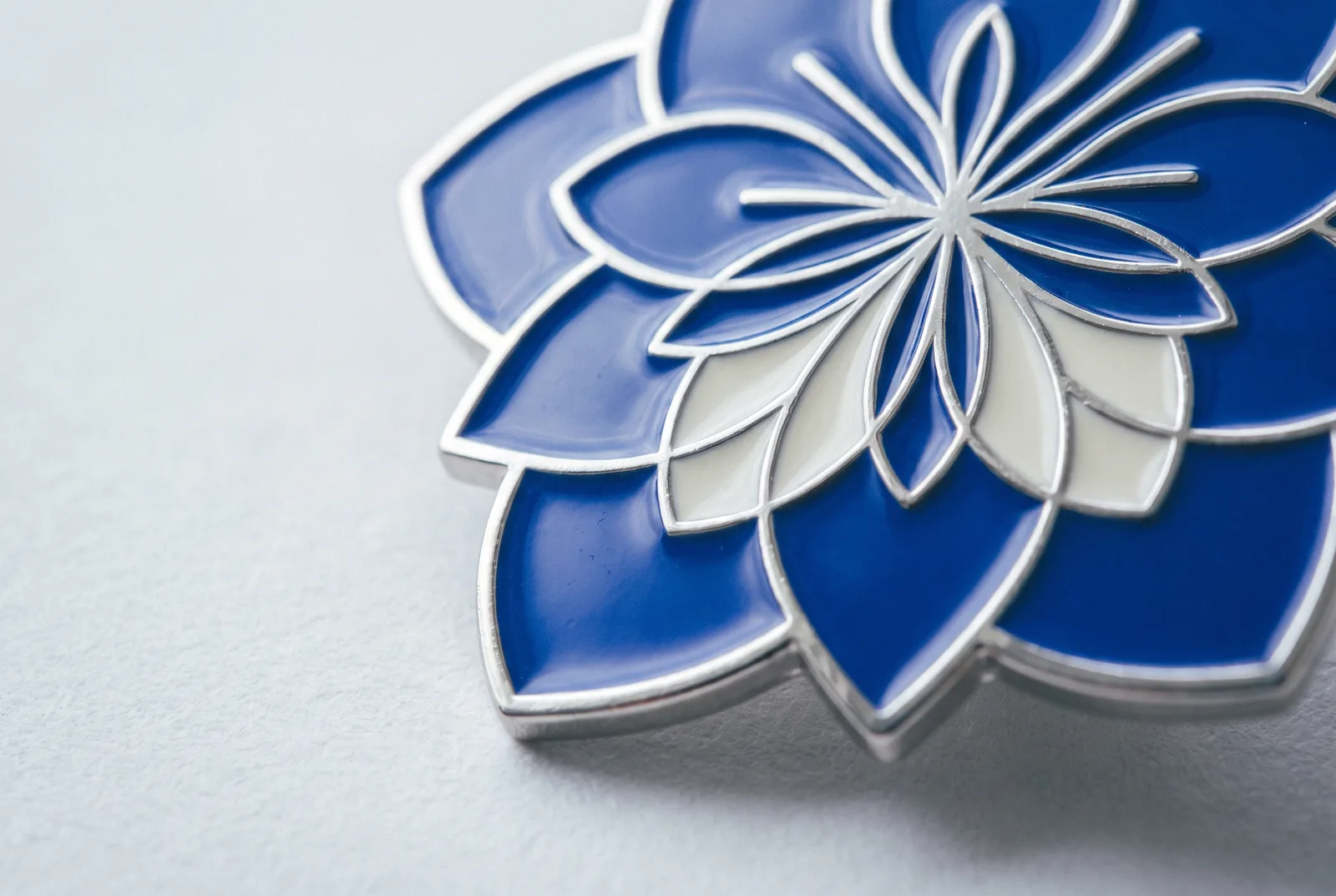
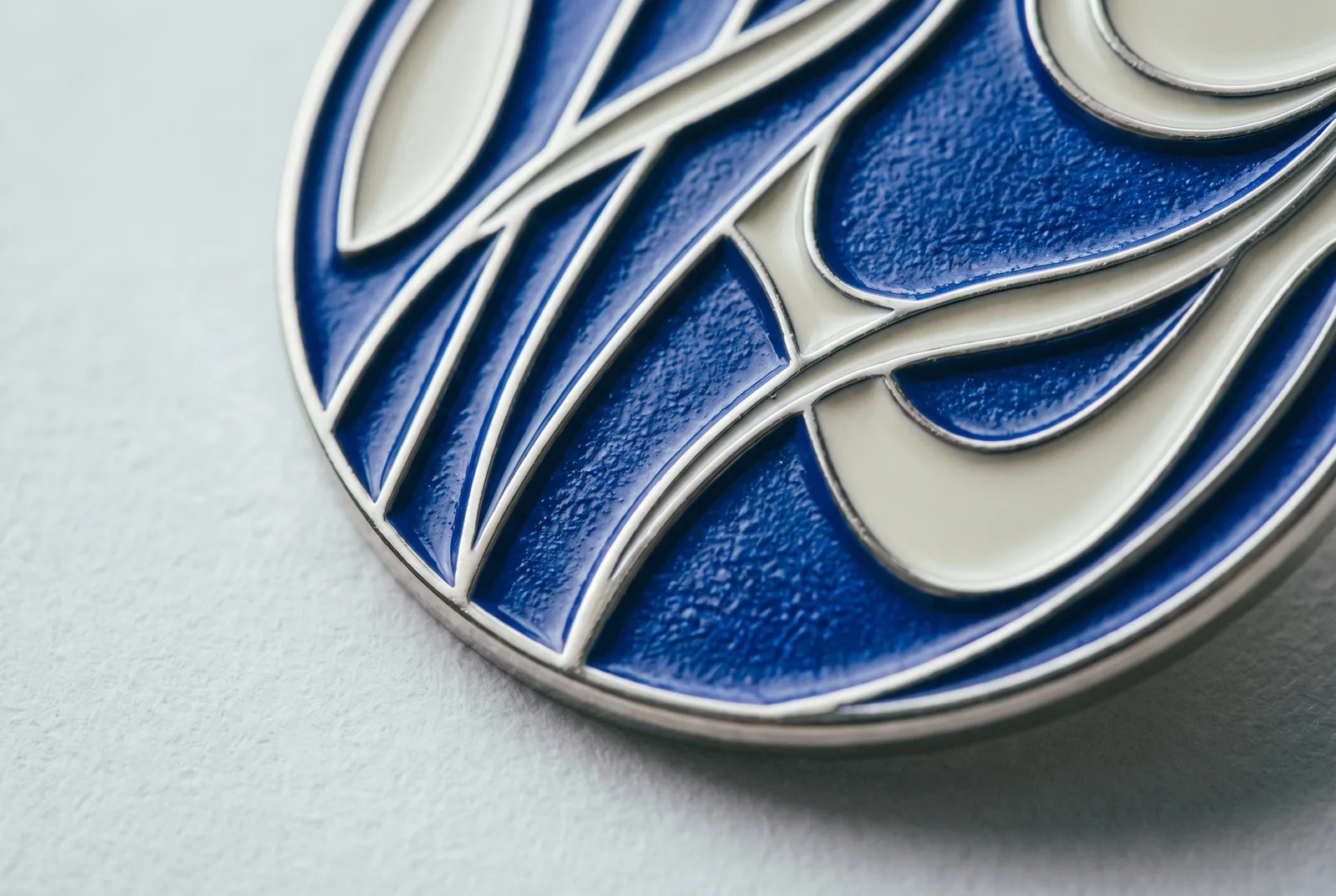
In a soft enamel pin, the enamel is filled below the top of the metal walls and cured as is. Run a thumb across the face and you feel ridges: raised metal lines, recessed color.
In a hard enamel pin, the cells are overfilled, cured at higher heat, then ground and polished until enamel and metal sit flush at one smooth level. The face feels like glass.
Detail capacity is nearly identical. Color counts are identical. The finish is the fork in the road.
Side by side
| FACTOR | HARD ENAMEL | SOFT ENAMEL |
|---|---|---|
| Surface | Polished flat, smooth | Textured, recessed color |
| Durability | High, scratch resistant | Good; epoxy dome optional |
| Detail | Fine, slightly softened by polish | Fine, stays crisp |
| Feel | Jewelry-like | Classic collectible |
| Price at 100 pcs | about $2.85 per pin | about $2.35 per pin |
| Typical buyer | Brands, uniforms, retail | Events, fans, trading |
Look and feel
Hard enamel reads formal. The flat face reflects light in one clean sheet, colors look deep, and the pin passes for jewelry on a blazer. That is why nearly every airline wing, staff badge, and luxury brand pin you have seen is hard enamel.
Soft enamel reads collectible. The ridged metal catches light on its edges and throws tiny shadows into the color cells, which gives the design a dimensional, almost embossed character. Trading pin culture grew up on this finish for a reason: it feels like a thing that was made, not printed.
Durability
Hard enamel wins here, and it is not close for rough use. The polished surface resists scratching, and there are no recessed cells to collect grime. A hard enamel pin worn daily still looks new after a couple of years.
Soft enamel is not fragile. The raised walls shield the recessed color from most contact. For a pin traded at one convention or worn on a jacket a few times a month, the difference rarely shows. If a soft enamel pin will live on a kid's backpack, add the epoxy dome: it costs about 15 cents per pin and closes most of the gap.
Cost
The polishing passes are hand labor, so hard enamel carries a 15 to 25 percent premium at every quantity. On a 100-pin run priced from our current tiers, that is about $50 total. On 1,000 pins it grows to roughly $230, which is where event organizers usually switch to soft enamel and put the savings into a bigger run.
Plating, metal lines, and color
Both finishes share the same plating menu: gold, silver, rose gold, and black nickel over the exposed metal lines. Two options change the look more than people expect. Antique plating, a darkened wash that settles into recesses, works beautifully on soft enamel because the texture gives it somewhere to pool, and mostly disappears on polished hard enamel. Dyed metal, where the lines themselves are colored instead of metallic, suits flat modern logo work and is available on both.
Color matching is Pantone-based on both finishes, with the same two caveats: true neons and metallic enamels have a narrower range, and hard enamel colors shift very slightly during the high-heat cure. We list every Pantone code on the proof so the shift is planned, not discovered.
The epoxy dome, the middle option
There is a third path people find halfway through deciding: soft enamel with a clear epoxy dome poured over the face. It smooths the texture, adds scratch protection, and costs about 15 cents a pin, far less than the hard enamel premium. The trade is a slightly plastic look on close inspection and a gentle bubble profile instead of hard enamel's dead-flat face. For kids' backpack pins and high-handling trading pins, it is often the right call. For brand and retail pins, it reads as a shortcut; spend on hard enamel instead.
Which to pick
Pick hard enamel when the pin represents a brand, will be worn constantly, or will be sold at retail where hand-feel closes the sale.
Pick soft enamel when you want the classic textured look, the design leans on fine raised detail, or quantity matters more than finish. Most first orders in fan and event contexts land here.
Still torn? Upload the artwork to the quote tool and ask for both prices in the notes. The proof costs nothing and shows your design in each finish.
Common questions
Which is better, hard or soft enamel pins?
Neither is better overall. Hard enamel is smoother and more durable, which suits logo and retail pins. Soft enamel is textured, cheaper, and holds fine detail well, which suits collectibles and event runs.
What is the price difference between hard and soft enamel?
Hard enamel runs 15 to 25 percent more at the same quantity. At 100 pins that is roughly $2.85 each for hard enamel versus $2.35 for soft enamel.
Do hard and soft enamel pins look different in photos?
Yes. Hard enamel photographs with a single even reflection because the face is flat. Soft enamel shows shadow lines where the metal is raised, which reads as texture on camera.